How One Dirty Solar Panel Can Affect Your Whole System
Many homeowners assume a bit of dirt on one panel is no big deal. In reality, a badly soiled patch, bird dropping, or layer of calima can turn one panel into the weak link, especially in string-based solar systems where panels work together.
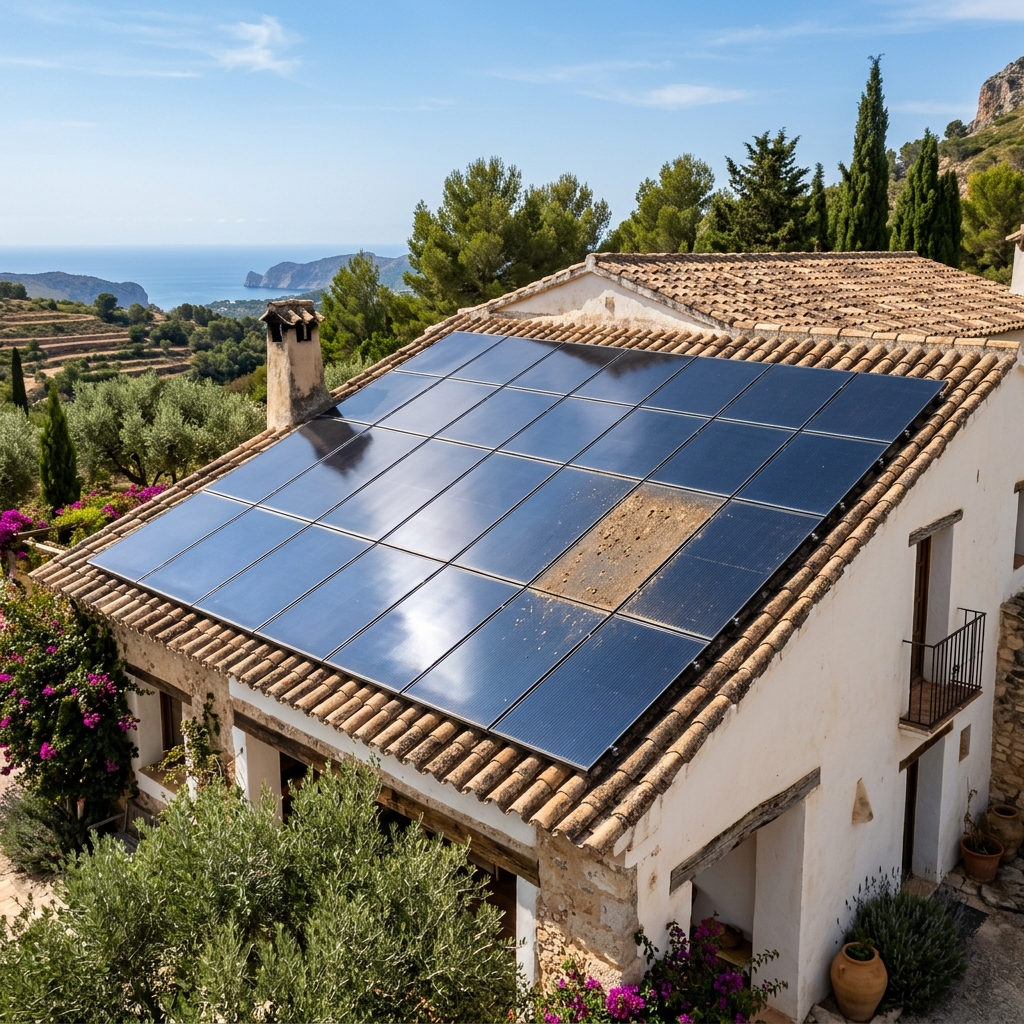
You invested in solar to generate as much clean electricity as possible. You probably did the math on how many years it would take to pay back the installation costs, and you likely keep an eye on your monitoring app to see how much energy you're producing. But solar panels do not always lose performance in a simple, panel-by-panel way.
In many systems, panels are connected in what is called a 'string.' This means they do not all behave independently. If one panel is underperforming because of dirt, bird droppings, calima dust, or hard water residue, it can hold back the others in that same string.
That is why a small dirty patch can sometimes cause a bigger performance drop than most owners expect. In this guide, we will break down the technical reasons why this happens, how to spot it, and why professional solar panel cleaning service is about protecting your financial investment, not just about keeping things looking tidy.
The common myth
A lot of homeowners assume that solar panels operate like a collection of light bulbs—if one is slightly dimmer than the rest, it doesn't affect the others. They think:
- “It is only one panel.”
- “It is only a small dirty patch.”
- “It will not matter unless the whole array is dirty.”
While that sounds reasonable, the physics of electricity and the way most solar arrays are wired tell a different story. In many systems, the problem is not just how much dirt is on a panel. It is where the dirt is, how uneven it is, and whether it causes one panel to become the bottleneck for the entire group.
If you have a string-inverter system, one poorly performing panel can act like a kink in a hosepipe. No matter how much water is available, the flow is limited by that single restriction.
Why one dirty panel can affect more than just itself
Solar panels in many homes are installed in strings. A string is a group of panels connected together in series to feed a single string inverter. Think of it like a chain of Christmas lights—everything in that chain is linked.
In a string-based setup, panels have to work as part of the same electrical chain. Because they are wired in series, the same electrical current flows through every panel in the string. If one panel is dragged down by a heavy patch of dirt, bird droppings, or thick residue, it can reduce the output of the whole string.
The 'Weakest Link' Principle
In simple terms, the weakest panel can limit the stronger ones. If panel #3 in a string of 10 panels is 30% blocked by dirt, the inverter may be forced to reduce the current across the entire string to match the capability of that one dirty panel. This is why a single dirty panel is often more serious than homeowners think.
Why a small dirty patch can matter more than homeowners think
A panel does not need to look terrible from the ground to be a problem. We often hear clients say, 'The panels look mostly fine,' but when we get on the roof, we see the real issues. Small patches of localized grime often cause disproportionate losses because of how they interact with the internal circuitry of the panel.
These are the kinds of issues that can cause significant performance drops:
Bird Droppings
Opaque, thick, and permanent until scrubbed. These act like 'hard shading' on specific cells, blocking all light and forcing the panel to compensate.
Bottom-Edge Buildup
Calima dust concentrated along the lower frame. This often blocks the lowest row of cells completely, which can be worse than light dust across the whole panel.
Limescale Spotting
Hard water spotting from garden hoses or 'dirty rain' that builds up over time and acts as a persistent filter.
Lichen & Moss
Growth around the frame edge can slowly creep onto the glass, causing permanent, growing shading effects.
Why dirt can behave a bit like shading
Most solar owners understand that shade is bad for performance. If a tree branch hangs over a panel, everyone knows that's a problem. What many don't realize is that <strong>dirt can create a similar kind of problem.</strong>
A thick bird dropping or a band of calima residue along the bottom edge does not just reduce light evenly. It creates 'partial shading.' This uneven soiling can behave more like a physical object blocking the sun than ordinary light dust.
When a cell (or a group of cells) within a panel is covered by a thick patch of dirt, it stops producing power and starts resisting the flow of electricity from its neighbors. This resistance creates heat—sometimes leading to 'hot spots'—and triggers the panel's internal protection mechanisms (like bypass diodes) to kick in. This is why uneven loss is often far worse than a thin, even layer of dirt spread over the whole array.
String inverter systems vs microinverters and optimizers
The severity of the 'one dirty panel' problem depends on the architecture of your system.
String Inverter Systems
These are the most common systems. Panels are in a chain. One weak panel can pull down the performance of the entire string (the 'Weakest Link' effect). These systems are the most sensitive to uneven dirt and require careful monitoring.
Optimizers or Microinverters
Systems like SolarEdge or Enphase handle mismatch better. The impact is usually more contained to the dirty panel itself. However, that dirty panel still loses output—and if it's your best-placed panel, the total daily loss is still real money coming out of your pocket.
What bypass diodes do, and what they do not do
Most modern panels include <strong>bypass diodes</strong>. These are clever bits of circuitry that help the system cope when part of a panel is obstructed. If one group of cells is blocked by a giant bird dropping, the diode 'bypasses' that section so the rest of the panel can keep working.
That is useful, but it does not mean there is no loss. When a diode activates:
- Production Loss: You lose the entire output of that bypassed section (often 1/3 of the panel).
- Inefficiency: The panel's voltage drops, which can slightly affect the efficiency of the inverter's MPPT (Maximum Power Point Tracking).
- Thermal Stress: The diode itself generates heat while working, which isn't ideal for long-term component health.
So while bypass diodes help reduce damage risk, they do not restore full performance. Bypass protection is a safety feature, not a 'skip maintenance' card.
Local causes in Axarquía / Costa del Sol
In our area, solar panels are exposed to more than just normal dust. We have a unique set of environmental factors that contribute to stubborn, uneven soiling.
Calima & Sahara Dust
Fine silicates that are 'sticky' and settle unevenly. Learn more about calima and Sahara dust on solar panels.
Coastal Salt Residue
In places like Nerja or Torrox Costa, salt creates a sticky film that traps other debris.
Agricultural Pollen
From local avocado and mango orchards, creating a tacky surface that dirt clings to.
Why rain is not a proper cleaning solution
Homeowners often think they can just wait for the next storm. But does rain clean solar panels effectively? Usually, the answer is no. Light rain often makes the problem worse by turning loose dust into a muddy slurry.
Rain also has zero impact on 'cemented' dirt like bird droppings or baked-on calima. Relying on rain in a dry climate like the Axarquía is like relying on a light drizzle to wash your car: it might move some dust around, but it won't leave the surface clean or restore efficiency.
How to spot whether one panel may be causing a wider performance issue
Look out for these signs that one 'weak link' might be dragging down your total solar savings:
Visible bird mess or staining
If you can see a large white splat from the ground, it's definitely affecting your output.
Concentrated lower edge dirt
Look for a thick line of brown/grey dirt where the glass meets the bottom frame.
Inexplicable production drops
If it's perfectly sunny but you're producing 15% less than last year, one dirty panel is the likely culprit.
Why bad DIY cleaning can do more harm than good
In trying to fix one dirty panel, homeowners often use garden hoses or abrasive brushes. In our region, hard water dries on a hot solar panel and leaves behind white limescale spots. This scale acts like a permanent filter, blocking light and being extremely difficult to remove. Professional cleaning uses de-ionized 'pure water' to avoid this entirely.
Why professional cleaning is about performance, not cosmetics
A professional solar panel clean is an investment in your system's ROI. It's about restoring light exposure, reducing mismatch risk, and removing baked-on residue that DIY methods cannot touch. In southern Spain, the cost of a professional clean is often recovered in just a few months of boosted energy production.
Final conclusion and CTA
If your solar panels have visible dirt, bird droppings, calima residue, or stubborn spotting, it is worth checking before that small problem quietly chips away at your savings.
Frequently asked questions
Can one dirty solar panel really affect the whole system?
In many string-based solar systems, yes. If one panel underperforms because of dirt, droppings, or residue, it can reduce the performance of other panels in the same string due to the chain-linked nature of the wiring.
Does a small patch of dirt matter?
It can. A small dirty patch in the wrong place can create uneven soiling, which is often more harmful than a light, even layer of dust across the array. It triggers bypass diodes and creates electrical mismatch.
Is dirt basically the same as shading?
Not exactly, but it creates a similar effect. Heavy or uneven dirt can block sunlight on part of a panel and reduce output in a way that resembles partial shading from a tree or building.
Do bypass diodes solve the problem?
No. They help the panel cope and reduce the risk of damage (like hot spots), but they do not eliminate the power loss. When a diode activates, you lose the power from that entire section of the panel.
What if I have microinverters or optimizers?
Microinverters usually limit the impact from spreading to other panels, which is better than a basic string setup. But the dirty panel still loses output and still needs attention to provide the ROI you expect.
Can rain clean solar panels properly?
Not reliably in Andalusia. Rain often brings more dust (calima) or just turns existing dust into mud. It will definitely not remove stubborn bird mess or baked-on mineral deposits.
How often should solar panels be checked?
A visual check every few months is sensible, especially after calima events, long dry periods, or if you notice a drop in performance. Most systems in Spain benefit from at least two professional cleans per year.
Servicing Your Local Area
We provide specialist solar cleaning across the entire Axarquía region.
View all service areas